Minnesota Orchestra

Previous Posts

Archives

Subscribe to Posts [Atom]

Blog Policies

Sarah Hicks and Sam Bergman

Wednesday, March 17, 2010

But Enough About Us...

Okay, people, let's take a step back here. I'll be the first to admit that, when we play Carnegie Hall each season, I'm probably the first to run out and buy the Times two days later looking for the review. And when this year's rather unusual program struck a positive nerve with the New Yorkers, I think we were all thrilled. And this week's New Yorker article was certainly icing on the cake, coming as it did from one of the most respected voices in the classical music world.

But honestly? When we've reached the point that our local press is interviewing the New York press just to ask them to say one more time that the Big Apple thinks we're awesome, we might all want to take a deep breath.

Don't get me wrong - the fact that the media capital of the US is paying positive attention to our orchestra is a great thing, and I don't mean to make light of the pleasure anyone in Minnesota might be taking in that fact. (I can only imagine that our marketing staff is even now preparing to make copious use of the juicier quotes in next season's brochures, as well they should.) But when I heard Alex Ross talking to MPR's Tom Crann on All Things Considered this afternoon, the most important thing I heard him say was, "An orchestra is only as good as its last performance."

I'll be honest - good reviews can sometimes drive musicians battier than bad ones, just because of the pressure of living up to the hype the next night, next week, next month, etc. In fact, ever since that oh-so-flattering New Yorker piece came out, our rehearsals have been rife with gallows humor. Pretty much every audible mistake that's been made in rehearsal this week has been followed immediately by someone turning to the person next to him/her and intoning, with mock seriousness, "...greatest orchestra in the world."

Again, we're thrilled that we turned in a powerful show in New York, and grateful for the accolades, but we're back in Minneapolis now, with the home crowd that pays good money to hear us work our tails off week in and week out. Which means only one thing: Carnegie is over, and now, we're only as good as our next concert.
----------------------------
On another note, and in the name of gathering some perspective in this week of laudatory excess, the Minnesota Orchestra will actually have one more turn in the national spotlight tomorrow, when our beloved Associate Concertmaster Roger Frisch is featured on no less august a program than ABC's World News with Diane Sawyer. And this story has nothing to do with Carnegie Hall.

I'll let the ABC folks bring you the whole story, but suffice to say that Roger recently faced a terrifying and potentially career-ending medical crisis for which there appeared to be no solution, until the doctors at Minnesota's legendary Mayo Clinic stepped in and performed a miraculous and groundbreaking surgical feat. You know, the kind they seem to perform roughly every other week down there in Rochester.

Roger's story is scheduled to run during Thursday's World News broadcast, which airs locally at 5:30pm on KSTP-5. (For you out-of-town readers, that's 6:30pm E/P on your local ABC-TV affiliate.) I'll update this post with a link/embed to the online feed once it's posted.

Updated, 3/18: Okay, so they got the name of the orchestra wrong (honestly, ABC, you showed a close-up of the words "Minnesota Orchestra" seconds after your reporter called us something else,) but the shots of Roger playing the violin while a surgeon pokes sharp objects into his brain? Coolest thing ever. Here's the link to the online text version of the story (which also calls us the Minneapolis Orchestra,) and here's the video of the story as it aired tonight on ABC...

Labels: ,

Tuesday, March 16, 2010

Conductor Hazing

It's been relatively rare in recent seasons that the Minnesota Orchestra has welcomed an unfamiliar guest conductor. This is partly because Osmo has been conducting more concerts each season than most music directors of US orchestras, and partly because we tend to ask conductors we know and like (Gilbert Varga, Yan Pascal Tortelier, etc.) to come back year after year, so there aren't a great number of weeks available for new faces.

Still, it's always important to find places in the schedule to slot in conductors we haven't seen before, because you just never know when lightning will strike, and a conductor and an orchestra will click in a meaningful way. (Osmo was appointed music director after only one guest appearance with us, because the chemistry was just that immediate.) So it's refreshing that, over the next month, we'll be working under the batons no fewer than three conductors we know only by reputation.

The first of these is Xian Zhang, who has been building quite a career for herself since winning a major conducting prize in 2002. We had our first rehearsals with her today, and it's always interesting to jump into a week of major repertoire with a boss you've only just met. Our orchestra tends to be somewhat active, sometimes bordering on chaotic, during rehearsals with conductors we know well, but when a new face is on the podium, we quiet down and wait to see how s/he likes things to go.

Xian comes across as very serious and efficient at first blush, which you'd expect from a young conductor leading her first rehearsals with an unfamiliar orchestra. But as we made our way through the finale of Tchaikovsky's fifth symphony, I realized that we were likely about to test the depth of that ultra-serious facade. See, the last movement of Tchaik 5 has this moment where everything builds to a shattering climax, then stops dead before launching into the coda. But because of the huge pause after a loud (albeit dominant, not tonic) chord, audiences have a habit of assuming the piece is over and starting to applaud. So, being the immature twits we are, we have made a habit of clapping and cheering wildly at that same moment the first time we play it in rehearsal.

Naturally, we don't feel any need to warn conductors about this. We just do it, and see how they react. In fact, how they react often gives us a pretty good indication of whether this is a conductor who we're going to get along with. If they scowl, or ignore it entirely, or worst of all, fail to get the joke, we're probably not a great match.

When we got to the big moment today, Xian almost didn't notice at first, because after cutting off the huge B-major chord, she had already whirled around to start telling the first violins something about the previous passage. But as the cheering, clapping, and stomping drowned her out, she turned back towards us, dropped her guard, and flashed a wide grin. Three seconds later, she was back with the firsts, telling them how she wanted the runup to the climax phrased. Nice moment. I think we're gonna like working with this one...

Labels: , ,

Tuesday, February 23, 2010

Conquering the Great Fugue

Buried somewhere in the raft of comments appended to my last post, WB Stahl made a request for more details on last week's concerts:

"So tell us more about playing the Grosse Fuge. I thought it was fascinating..."

Happy to oblige, though I'm hardly an expert on the piece. This was actually my first time playing it, believe it or not, in either the original quartet form or Michael Steinberg's electrifying orchestral version. And that gave last week's rehearsals and performances a real sense of immediacy for me, which is something that's hard to duplicate in a performance where you've played the rep a dozen times or more.

To begin with, the Grosse Fuge is a bear of a piece to wrestle with as a performer, whether you're one of four or one in a sea of string players. And it can also be a maddeningly complex thing to listen to or study - Alex Ross of The New Yorker calls it "a musicological Holy Grail, a vortex of ideas and implications. It is the most radical work by the most formidable composer in history, and, for composers who had to follow in Beethoven’s wake, it became a kind of political object. Arnold Schoenberg heard it as a premonition of atonality, a call for freedom from convention... Benjamin Britten, who took pride in tailoring his music to the needs of particular performers and places, was heard to complain that Beethoven’s late works were at times willfully bizarre, prophetic of avant-garde, obscurantist tendencies."

That mind sound over the top - after all, it's just an oversized fugue, right? - but I understand the strong reactions the piece provokes. For one thing, the main fugue subject, which goes like this...

(click to enlarge)

...is almost entirely overwhelmed by Beethoven's subsequent counter-subjects after that initial unison blast from the performers. In a strange way, the subject is actually the least interesting element of the piece. The primary line our ears want to follow is a fast-leaping, snap-rhythm counter-subject that starts in the first violins as the violas insistently hammer away at the subject to no avail. The seconds and cellos (and basses, in Steinberg's version) jump in undaunted, and you're off on one of the strangest and most violent trips in all of Beethoven's output. In fact, the dynamic marking stays at forte or louder for every instrument for the next four pages of music. (That's four pages of a single-line part; it's probably more than ten in the score.)

So essentially what you have is four equal lines, all blasting away at maximum volume at the composer's instruction for 5 or 6 minutes at a clip, during a piece that is based on one of the most complex compositional techniques ever devised. It's totally crazy, it's the antithesis of good fugue writing, there's absolutely no way it should be anything but an ungodly mess...

...and yet, somehow, it isn't. I'm still not sure how that can be true, even after a week of performing the thing. In particular, I'm thinking of a passage midway through that first extended forte gallop, in which each section in turn switches abruptly from playing the snap-rhythm counter-subject to playing a furious run of triplets that leap from register to register and seriously threaten to derail the rhythmic stability of every player who hasn't made the transition yet. It's a train wreck waiting to happen, and yet, it didn't happen. And I was never seriously worried that it would.

Of course, having a conductor helps, and in the original version, that train wreck spot is a much bigger risk, since there's no one individual in charge of keeping everyone together. And that, I think, is the real fun of playing the orchestral version of the Grosse Fuge (beyond the simple pleasure of being able to make a lot more noise, of course.) With Osmo insuring that the overall pulse of the beastly thing wasn't going anywhere unexpected, we were free to just attack our individual parts with all the ferocity we could muster, and see where we ended up.

I actually found myself out of breath at the end of our first performance of the week, just from the effort and exhilaration of it all. I don't know whether the audience got as much out of it as we did, since there's no question that this is one of those pieces that is even more challenging to listen to than it is to play, but personally, I had a blast. (And I can't wait to play it on the stage of Carnegie Hall next Monday...)

Labels: , ,

Sunday, February 21, 2010

More $$ For Less Music? Think Again.

For the past few days, we've been performing one of the more difficult and exhausting concerts of our season: a string orchestra arrangement of Beethoven's massive Grosse Fuge, Chopin's 2nd Piano Concerto (with the amazing Garrick Ohlsson,) and Mozart's 40th Symphony. There are a lot of different things that can make a concert seem difficult, and this particular rep covers most of them.

In fact, the moment our first concert of the week (a Thursday morning matinee) was over, my stand partner turned to me and said, "Wow. This feels like a really long program." I agreed. Though, in fact, the concert was right around our usual two hours from start to finish, it felt like a marathon. My shoulder ached, and I saw a number of other musicians massaging sore limbs as well.

So you can imagine how surprised a number of us in the orchestra were to read this paragraph at the end of the Star Tribune's otherwise positive review of the concert:

"It is distressing to note that this program contained barely an hour of music. For people paying top price, that works out to more than a dollar an [sic] minute. This increasing brevity is a disturbing trend."

Now, first off, I don't know what trend he's talking about. A local trend? A national one? I haven't done any research on this, but in the ten years I've been in the orchestra, it seems like the vast majority of our subscription concerts have hovered around the two hour mark, including a 20-minute intermission. Add in the time it takes the orchestra to tune before each piece, the audience to clap before and after each, and the stage crew to reset the stage between pieces, and you're generally talking about something like 90 minutes of actual music per show, give or take.

Second, and more importantly, the reviewer (who I don't actually know personally, but he's a respected music writer of long standing in this town) is just flat wrong about the length of the music on this particular concert. I know because the paragraph above so shocked me that I timed each piece the next night. Here was the breakdown:

Beethoven - 18 minutes

Chopin - 32 minutes

Various encores by Ohlsson: 5-7 minutes

Mozart - 33 minutes

So not counting intermission, stage moves, applause time, tuning, or the entertaining five-minute speech violist Mike Adams gave at the top of each show to introduce the Grosse Fuge, that's 88 minutes of music. In fact, when all the extraneous stuff was factored in, all the concerts but Thursday morning ended north of the two-hour mark. Thursday (the concert the Strib reviewed) ended just under two hours, because Garrick didn't play an encore that day. (Our Coffee Concert crowds tend to be considerably older and less demonstrative than our evening crowds, and they rarely clap long enough to draw an encore from visiting soloists.)

So what was the critic thinking? A glance at our program book explains part of it - we print estimated performance times next to each piece, and this week, there was a typo: the Mozart was listed at 22 minutes instead of 32. (Update: our publications editor informs me that the error was not, technically, a typo, but a reprinting of an error in a source publication we use for such things.) And all three estimates were at least a minute under our actual times, so if you went by the book, it did look like we had only programmed 69 minutes of music. Still, I find it hard to believe that anyone who was actually present at the concert could have come away finding it to be a short enough program to be worthy of comment.

But that's where the nature of deadline writing likely comes into play. A critic attending our concert has only a few hours (at most) to get his review filed for publication, so most experienced writers write a few paragraphs in advance - the basic background information on the music and the performers that won't be affected by the quality of the performance. I'm guessing that Mr. Beard also pre-wrote his objection to the program's length based on the misinformation in our book, then didn't think to revise or remove it after the actual concert.

Understandable, yes, but sheesh. Way to make us seem like we're nickel-and-diming the paying public out of their rightful amount of music...

Labels: , ,

Friday, February 12, 2010

Musical Chairs

This week, we're playing a richly varied program of music by Sibelius, Grieg, and Mozart - meat and potatoes repertoire - and I'm sitting at the back of the section with Sifei Cheng, who was my very first stand partner when I joined the Minnesota Orchestra. And for some reason, that's got me thinking about the benefits and drawbacks of the way we section string players drift around the stage from week to week.

Back when I first arrived in Minneapolis, in February 2000 (yup, my 10th anniversary with the orchestra comes up next Monday!), every member of the string section had a designated chair where we sat every day, every rehearsal, every concert, unless someone ahead of us was absent for some reason. Technically, all "non-titled" section players were equals, but there was no chance to move closer to the front of the section until someone ahead of you left the orchestra. In some sections, a vacancy would be filled by moving all the existing players up to fill in the gap, then placing the newest member at the back, but in other sections, any existing player wishing to move up would have to actually re-audition. Some members of our violin section actually auditioned 5 or more times over the course of their careers, just to get a better, but still non-titled, chair!

My chair was on the inside of the fourth desk of violas, with Sifei just to my left. It's not a bad chair, actually, despite being nearer the back of the stage than the front. You can usually see both the conductor and the principal viola pretty clearly; you're surrounded by other violists; and on a good day, you can even see the concertmaster, which is a bonus for any string player.

Also, as stand partners go, it probably doesn't get any better than Sifei. (His name is pronounced SEE-fee, by the way - I've heard some amazing butchery of that name over the years.) He's one of the calmest and friendliest people I've ever met, he plays absolutely effortlessly, and almost nothing fazes him. When you're a 23-year-old kid less than two years removed from college and jumping into the first really big job of your professional life, that's exactly the kind of player you want next to you. (It also didn't hurt that we're both obsessive sports fans. You've gotta have something to talk about when the guest conductor's horrible and the music is easy.)

I'd been in the orchestra for a little over three years when everything changed, and we voted to scrap our fixed-chair tradition for a mildly complicated system of revolving seating for section players. It was strictly voluntary for existing members of the orchestra (so as to protect those players who really had spent years painstakingly working their way up through the ranks,) but mandatory for anyone joining up after the system was enacted. The rationale for revolving is simple: sitting up front is better in almost every way. You can hear more accurately, see more clearly, and generally feel far more important to the ensemble blend than you do sitting thirty feet back on last desk.

Then, there's the undeniable fact that not everyone in a fixed seating system gets along as well as Sifei and I did. In my first professional orchestra, the old-timers loved to tell the story of the two bass players who sat together for decades without speaking, each with a single earplug stuffed into the ear that was turned towards the other. So the chance to switch seats every couple of weeks can be a lifesaver.

On the other hand, weeks like this one remind me of just how comfortable I used to feel with Sifei always on my left. It wasn't just that he was (and is) a monster player; it's that the permanence of a single stand partner allows you to build chemistry over time, the same way that members of a string quartet do. When you know instinctively how the person you're sitting with reacts to any musical situation, there's a comfort level, or at least a heightened awareness, that comes over your playing. Basically, it feels more like a partnership, at least when things are going well.

So while I don't quite miss the days when my career as a violist began and ended at "fourth stand inside," I feel lucky that I got a chance to try out both systems. It's still better at the front, but it's nice having a slightly deeper musical partnership that you get to revisit every now and then. Best of both worlds, if you ask me...

Labels: ,

Sunday, January 24, 2010

Of Cough Drops & Futility

I'm sitting on my couch in a semi-comatose state right now, which is a position that has become all too familiar to me this season. I think, prior to this past fall, I had missed a grand total of four concerts due to illness in my ten years with the Minnesota Orchestra. Today, I'm missing my fourth since October. (Granted, the other three were all in a single, awful, piggy-flu week, but still.)

I probably shouldn't have played last night's concert in St. Paul, either, given the likelihood of exposing everyone around me to whatever crud I seem to have picked up, but as previously mentioned, I absolutely hate calling in sick if there's any way I might be able to perform, so I slogged my way over to the Ordway, tried not to touch or breath on anyone, and made a go of it. All things considered, I think I played fairly well, considering that I was having to dive into the pocket of my tux for a wad of tissues every time we had a rest of more than two bars.

But I'm not the only one suffering in our viola section right now. Our two front-desk players, Tom Turner and Richard Marshall, have both been battling a nasty cold for weeks now, with the result that, while they are both healthy enough to work at this point, they are also both prone to sudden, random spasms of coughing at any moment, which is not a terribly helpful condition in our line of work. Especially when you're playing, as we have been this weekend, the complete ballet score to Stravinsky's Firebird, which consists primarily of long stretches of incredibly quiet music during which a coughing fit in the viola section would not go unnoticed.

So last night, Tom, Richard, and I (all sitting tightly grouped at the front of the section) made up a hilariously unhealthy triangle, and midway through Firebird, as I was wiping my nose for the 723rd time since we'd come on stage, Tom started to cough. Richard had already been emitting occasional grunts and soft ahems, but when Tom made a quiet strangling sound, it was clear that he was holding back a big hackfest.

Now, ordinarily, when we're playing at Orchestra Hall, anyone who's sick makes a point of grabbing a few cough drops from a big cup we keep just inside the door to the wings, and stores them on a little shelf just underneath his/her music stand, in case of emergency. Tom and Richard have had about two dozen Halls sitting on their shelf for the last couple of weeks. But at the Ordway, there is no cup of cough drops, and even if there were, the music stands there don't have the little shelf, so you'd have to find somewhere else less convenient to keep them. The upshot of this last night was that, when Tom started to cough, he had no cough drop to help him out.

My stand partner, however, did. Ken Freed is pretty much never without a cough drop, or an extra set of strings, or any number of other emergency items, and as I wiped my nose and Richard grunted and Tom started turning bright red with the strain of not coughing, Ken fished in his pocket and came up with a single cough drop. But here's where it gets complicated: keep in mind that we're in the middle of a performance of a hugely dramatic but extremely soft score, and that we're all sitting right under the conductor's nose, more or less exactly where the eyes of the majority of the audience are probably focused. Also, Ken was sitting to my right, meaning that he was too far from Tom to be able to alert him to the fact that a cough drop was available.

What happened next was possibly the world's most elaborate and yet unsuccessful attempt at cough drop transference in human history. As Ken pulled out the drop and looked at me to see if I understood what he was trying to do, I nodded but also immediately pointed my bow at our stand to signal that we were about to have to play again. Ken quickly handed me the drop, and having only a few seconds to spare before our entrance, I placed it on the leg of my tux pants and got my bow up to the string just in time. Unfortunately, tux pants are extremely slippery, and the drop almost immediately began to slide towards my knee.

We were at literally the softest moment of the piece when the drop fell off my leg and headed for the stage. In desperation, I clamped my shoes together, and somehow managed to catch the drop soundlessly. But now we were into a stretch of Firebird where we would be playing continuously for several minutes without so much as a bar of rest. Meanwhile, Tom was still fighting the cough and my nose was running again.

About five minutes later, we finally had a quick rest, so I let the drop slide off my shoe and, catching Tom's eye, pushed it towards him with my bow. He corralled it with his foot just in time for us to begin playing another unbroken stretch of music. Unbroken, in fact, to the extent that we wouldn't have another rest until the end of the piece. The drop remained sitting on the floor by Tom's chair straight through to the finale. Great success.

I'm relating this story only because I've occasionally been asked by audience members about some odd musician dance that they saw occurring during a performance, and it's usually something like this. Anyone else got any good stories of in-concert damage control shenanigans?

Labels:

Monday, November 9, 2009

Pushing The Limits

Last week, the Minnesota Orchestra played what will probably stand as the most difficult and exhausting program we'll perform in this entire season. There were four major works to be gotten through, each one hugely challenging in its own way, and for a lot of us, it was our first time playing three of the four.

One of the dirty little secrets of professional orchestras is that the reason we're able to crank out reasonably good performances of an ever-changing array of repertoire (think about it - do you know of a theater company or string quartet that mounts 50-70 completely different programs every year, with just three or four rehearsals for each?) is that we already know most of it pretty well. Sure, it might take a few minutes for the particular intricacies of Brahms or Stravinsky to slip back under your fingers, but it's the same notes you played the last time that particular piece crossed your stand, and after a few years in the profession, you've got a pretty good handle on 75-80% of the core repertoire you'll be playing for the rest of your career.

So if muscle memory and simple musical recall are an orchestra musician's best friends, then a program full of world premieres and obscure works from the past would seem to be our worst enemy. But for most of us, that's not the case at all. Yes, there are musicians who would rather just slog through the same old familiar warhorses and pick up their paycheck while putting in as little effort as possible, but for most of us, new challenges keep the work fresh, and the chance to attack a score we've never seen before is deeply satisfying, assuming that the music in question is quality stuff.

The world premiere we played last week was by a composer we've gotten to know well during Osmo's time in Minnesota, and whenever we see his name on the schedule, we know we'll all need to sign out our parts weeks in advance of the first rehearsal. Kalevi Aho's music is rich and distinctive, well-constructed and obviously composed with a deep understanding of the orchestra and its various components, but it is also invariably at the absolute outer edge of playability for nearly every instrument. In the days leading up to an Aho week, musicians are constantly wandering up to each other backstage, saying things like, "I mean, have you looked at page 14? The hell am I supposed to do with that?"

Still, the satisfaction I get from practicing new music that pushes me to my limits has always been one of the things that thrills me most about playing music for a living. Back in my college days, the Contemporary Music Ensemble was the group that all the best players wanted to be in, not because most of us believed that the music was somehow better than Beethoven or Brahms, but because once you can play Stockhausen, or Carter, or Wuorinen, you know you can play anything. And that's a powerful realization.

Last Friday night, I was asked to speak to a group of the orchestra's most loyal supporters before the concert, and give a bit of a preview of the music they'd be hearing that evening. Mr. Aho was present for this event, and in the course of describing the piece we'd been working on, I took the chance to address the composer directly. I told him that the first piece of his I'd ever played was his Insect Symphony, and that, at the time, it was the most difficult thing I'd ever played in an orchestra. "That was four years ago," I said. "Now, that symphony isn't even in my top five, and those other five are also all yours."

The incredible thing about Aho, though, is that music that is so fiendishly difficult for those of us on stage can sound so natural and comprehensible out in the audience. There are a lot of composers today writing music that's so difficult that it can barely be played. Most of them do it on purpose, hoping that, by stressing out the performers, they'll create a sense of urgency and chaotic panic in the music that the audience will instantly be able to sense.

Aho, on the other hand, reminds me more of Stravinsky - he must know that the music he's writing will fall beyond the capabilities of all but the finest musicians of his era, but he's not necessarily writing just for us. The musicians who first played some of Stravinsky's now-famous ballet scores called them unplayable, but I've been playing them with no great discomfort or stress since my college days. I fully expect (and I'm guessing Aho does, too) that the musicians of the late 21st century will find Aho's symphonies no more challenging than I find The Rite of Spring. I only wish I could be around to hear them...

Labels: , ,

Wednesday, November 4, 2009

Come towards the light

We've successfully navigated through our first Inside the Classics concerts, which is a huge relief. We had the added pressure of creating a show that was radio-friendly (which meant, among other things, no sight gags and minimizing dead air, which changes the tempo of what we do), so it was a stressful week.

I've been saying for a while now that one of the more unusual features of my new position as Principal Conductor, Pops and Presentations (did I officially mention that on the blog? Can't remember...) is that I conduct a huge spectrum of repertoire (much more than in your average pops conducting position) - "everything from Beethoven to Ben Folds" has been my line. Well, last week was where the idea of that sound bite came from, and it certainly was a dramatic switch between Friday night's ItC MPR live broadcast to Saturday's concert featuringBen Folds.

The fact that the show happened to land on Halloween added to what was already a huge event - the Hall was beyond sold out, and tickets for standing room disappeared in an instant. There was definitely a different feel in the house - I don't think I've ever heard an audience make so much noise as a guest artist walked onstage - and much of the crowd was in the Halloween spirit, decked out in elaborate costumes.

Orchestra concerts generally tend to be fairly serious affairs, so it was interesting to see how our players would react to a concert that was outside the norm - and I think it's a credit to our musicians that they decided to join in on the fun. We had a variety of bewigged and costumed players onstage; we also handed out Folds-esque glasses for a subtle costuming touch (we had about 20 players with them on, and I donned them for the first half). A video sampling of backstage shenanigans (including an explanation from Ben about how to figure out if pants will fit you):


I met Ben over a year ago at when we did a show at the Mann Center in Philadelphia, and we've been working together on and off ever since. I love collaborating with him; aside from being a great songwriter and performer, he's really a consummate musician (and his classical training background comes in handy when working with an orchestra!). I mean, who else discusses the Lydian mode as part of their mid-concert schtick?

For the second half of the show we did a hasty outfit change, pulled on wigs and re-emerged as Sonny and Cher (I was apparently so unrecognizable that several members of the Orchestra were wondering "Who's that woman?" when I walked onstage):


(We're singing "I got you babe". Good times.)

I'm all for formality and seriousness where it's warranted (and part of me really loves the sense of decorum and ritual that is a large part of the usual classical concert process). But I do love a regular foray into the lighter side of things. Because life (and music, for that matter) is that much better with a sense of humor.

Labels: , , ,

Tuesday, October 20, 2009

No kidding

Speaking of acoustics, here's another interesting bit on sound and hearing. Although it comes as no surprise!

One caveat; musicians sometimes have to contend with the very real possibility of hearing loss associated with instrument-induced damaged.

Labels: ,

Arguing Acoustics

Washington Post music critic Anne Midgette has an interesting post up on her blog today concerning concert hall acoustics and how much of a difference they really make to an orchestra's sound. Specifically, she mentions that the Kennedy Center Concert Hall, home to D.C.'s National Symphony Orchestra, has long been said to be an extraordinarily difficult place for an orchestra to hear itself. Some believe that the NSO has more trouble playing with good ensemble than comparable orchestras who make their homes in better halls. (Midgette doesn't seem to be buying this, and claims that visiting orchestras frequently play better together than the house band.)

This is a familiar discussion point for most orchestras, and certainly one that's a frequent topic of conversation here in Minneapolis, where Orchestra Hall delivers a big, booming sound to the audience, but forces those of us onstage to rely on a lot of visual cues and the vague hope that the few colleagues we can hear clearly are in the right place and therefore reliable to follow. (Those colleagues are, of course, hoping the same thing.)

When Osmo first took up his post as music director, I remember a lot of questions being shot his way about what could be done, short of building a new hall, to improve our cross-stage hearing. Over the years, we've tweaked things here and there - for instance, we now play with the winds, brass, and percussion on risers, whereas the entire orchestra sat on one level when I first joined up ten years ago - but there are definitely still audibility issues that we all deal with on a daily basis.

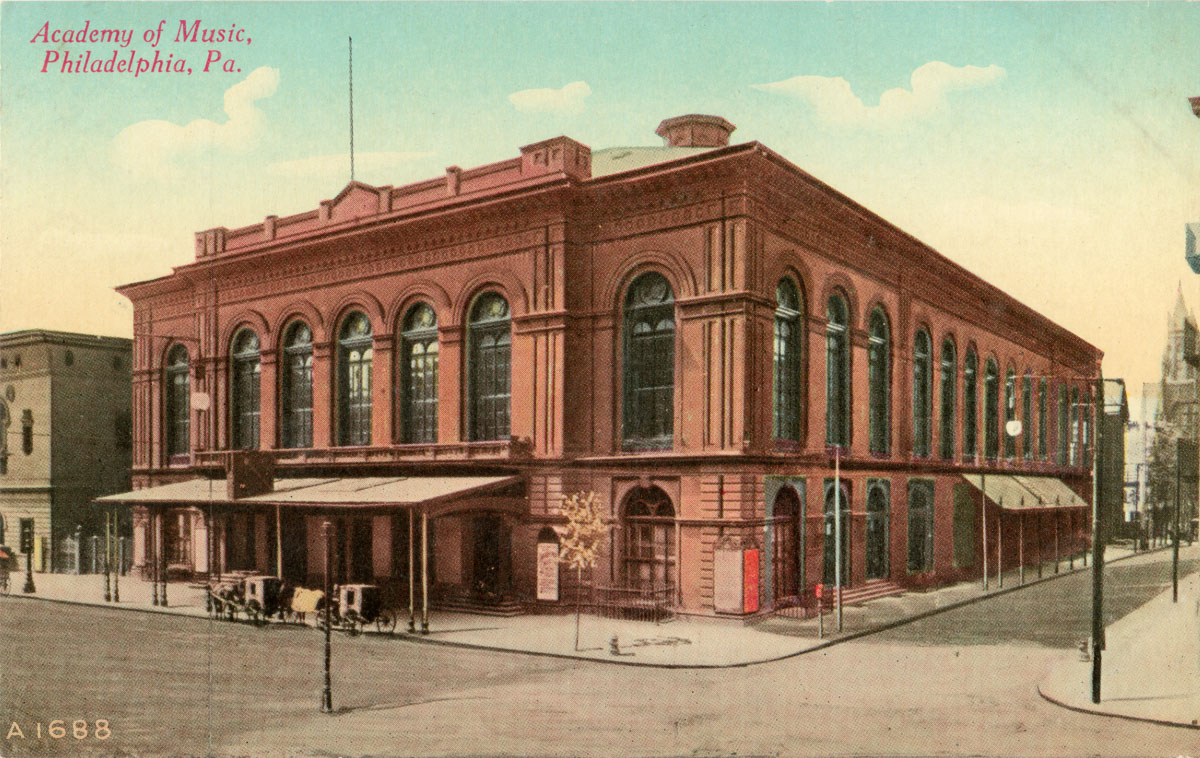
Still, Midgette's point seems to be that there are very few orchestras that don't have to deal with an imperfect hall, and the great orchestras find ways to turn even a downright bad hall to their advantage. (The classic example is Philadelphia, where the orchestra's famous string sound, which is big, rich, and full, almost certainly developed as a response to playing their concerts in the now-retired Academy of Music, which, I can tell you from personal experience, was like performing in a concrete bunker lined with lead curtains.) Suck it up, in other words. Yes, it would be great if we all got to spend our lives playing concerts at the Musikverein every week, but it ain't gonna happen, so make the best of what you have.

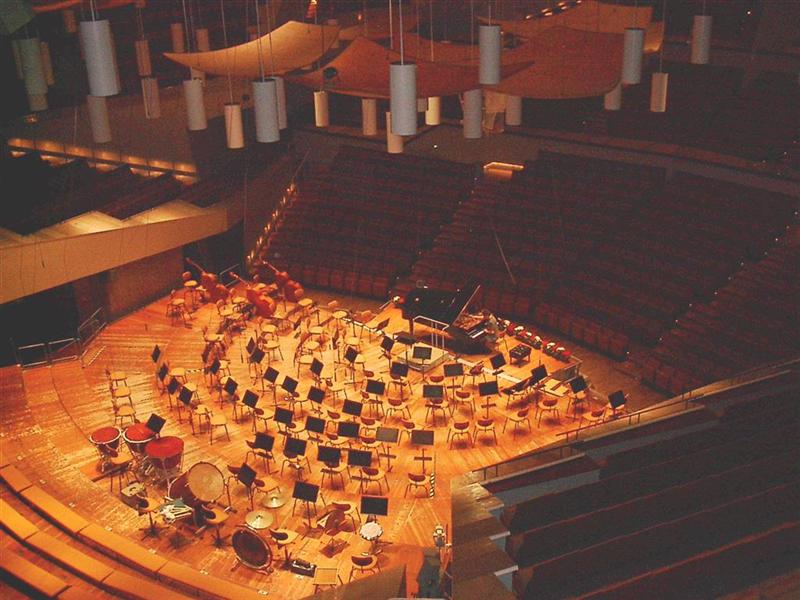
Speaking of which, I remember a funny story that Osmo told in rehearsal once, when we were having trouble playing something or other as tightly together as we needed to, and some of us were clearly getting frustrated by not being able to hear far-flung sections of the ensemble accurately. He told us that he'd recently been conducting at the world-famous Berlin Philharmonie (considered by some, including me, to have the finest concert acoustics in the world,) when he stopped the orchestra and pointed out that something was not quite together. The concertmaster of the Philharmonic replied without a hint of irony, "Well, you know, in this hall..." The grass really is always greener on the other side, I guess.

Labels:

Tuesday, August 4, 2009

Don't Worry. Be Happy.

Every few years, someone does a study of orchestra musicians, and comes up with the staggering result that many of us are deeply unhappy. Or if not actually unhappy, at least deeply dissatisfied with our work life. These studies are always duly reported by the arts media with the requisite degree of incredulity (How could people who are getting paid to play great music possibly be unhappy? What is wrong with these people?), and there are usually a few backlash commentaries appended in which unhappy people who get paid to write about great music order those of us who get paid to play it to cheer up and grow a sense of perspective.

I've always been fairly skeptical of these studies, partly because I just haven't met all that many unhappy musicians. Cynical, yes; jaded, sure, but not actually unhappy on the whole. Also, I've noticed that a lot of these studies seem to come out of the UK, which makes sense, because while Great Britain boasts some of the world's finest orchestras, those orchestras are, by and large, notorious for low pay and lousy working conditions, as compared with their peer orchestras in the US, Germany, and Austria.

But if there is a kernel of truth in these studies, it can be found in the conclusion that orchestral musicians can grow to feel stifled by the very nature of orchestral life. As an article I read last week put it, "orchestral musicians are, in a sense, the assembly-line workers of the arts world. Like their counterparts on the factory floor, they're asked to execute the exact same task again and again — a method that may be efficient for producing consumer goods, but hardly one that promotes inspired performances."

Now, I would argue that if we're actually being asked to execute the exact same task in the exact same way again and again, someone in charge [looking meaningfully in the direction of the podium] isn't doing his/her job correctly. But the point is well taken - unlike soloists or chamber musicians, or even freelancers who leap from gig to gig, full-time orchestra players have to get used to a lifetime of following orders, and having little to no say in the nuances of any given performance. We don't get to pick the repertoire we perform, we have very little say in who the conductor or the soloist will be, and while over time, our ensemble might develop a certain group style of playing, we're always subject to the whims of whoever is waving the baton.

There's a reason for this, of course, and it's that, when you have nearly 100 musicians on a single stage, someone has to be in charge. Democracy is simply not a viable option for a symphony orchestra. It's barely a viable option for string quartets, many of which spend endless rehearsal hours bickering over everything from bowings to the proper way to play a trill in Haydn. So I've never much minded trading my voice in the process for the simple pleasure of knowing that the rehearsal isn't going to be derailed by two opinionated violinists butting heads. And if I think the conductor is an idiot, I can blow off that particular head of steam over a post-concert beer, and remind myself that he'll be gone next week. (Unless, of course, he's the music director, which is a whole different problem that, thankfully, I don't have at the moment.)

In the end, I think that these orchestral happiness studies tend to get more attention than they really merit. They're interesting to people largely because they shine a bright light on the fact that the orchestral workplace is, after all, a workplace, subject to the same stresses, personality conflicts, and political gamesmanship as any other office. But unless an orchestra is truly being badly mismanaged (and certainly some are,) the vast majority of the musicians tend to be pretty content with our lot, even if we think there's room for improvement. In other words, it's probably a lot like where you work, except that the last few hours of your work week probably don't include formalwear. Lucky you.

Labels: ,

Wednesday, July 29, 2009

Fish Out of Water

We're in the final days of our summer season, with two concerts left to go, and that means that we're deep into rehearsals for the most stressful show we play all year. It's the full-length semi-staged opera that brings Sommerfest to a close every year, and it's a brutally difficult thing to pull off for a variety of reasons.

The first problem with the opera is that we simply don't have nearly enough time to prepare it. During our regular season, we rehearse a concert for three days or so, then perform it three or four times before starting the next week's repertoire. During Sommerfest, we also perform three or four concerts a week, but every one of them has different repertoire. So if you've ever wondered why professional orchestras tend to play a lot of familiar old warhorses in summer, the lack of rehearsal time is a big part of it.

And that brings us to the second difficulty of the Sommerfest opera. To put it bluntly, we are not an opera orchestra. For the most part, our familiarity with operas and how to play them is very, very low, at least compared with the musicians who play them full-time. Opera really is a very different game than symphonic work - at the risk of overgeneralizing, orchestral music is Germanic, while opera is Italian. Symphony orchestras base nearly everything we do on rigid precision and rhythmic clarity, while opera swims in a much more freeform pool where rhythm is merely a suggestion, tempos shift violently back and forth at the whim of the singers and the conductor, and many of the important elements that give the work its shape aren't noted in any way in the musicians' parts.

And speaking of parts, we come now to the major reason that we'll all be sweating it out until the last note of Aida sounds on Saturday night. As anyone who's ever played in an opera pit can tell you, the printed orchestra parts for even the most famous operas tend to be horrifically, atrociously, criminally difficult to read. I've never really understood why this is, but it's a fact. What's in our part is often different from what's in the conductor's score in very important respects - dynamics might be missing, notes can be incorrect, and the publisher's main aim was obviously not to give us readable parts, but to save as much ink as possible. (For instance, our Aida parts don't have the key signature at the beginning of each line. The sharps and flats only appear when the key changes, so there are several occasions when no key signature appears in my part for several pages. That's a disaster waiting to happen when your part is 57 pages long and you haven't played the piece before.)

There are also lots of little things wrong with the parts - notes that aren't spaced properly, lyrical cues in two languages (one of which is German, for absolutely no reason at all) jammed into small spaces between staves, and then, there's my favorite bit of insanity. The markings in our parts for "piano" and "forte" dynamics are not the usual stylized and markings we're all used to seeing. The "p" is a standard lowercase letter, but the "f" is a block-printed capital letter in miniature, and if you're more than six inches from the page on your stand and playing through a fast section, the f looks exactly like the p!!! This has led to some unscheduled drive-by solos in our rehearsals, which would be hilarious if it weren't quite so terrifying.

There was a time, not so very long ago, when this is what nearly all orchestra parts looked like. But over the last several decades, some very dedicated and detail-obsessed orchestra librarians have helped publishers standardize parts, remove errors, and establish a basic "look" for symphonic scores. There's still plenty of variation from publisher to publisher and country to country (the French, in particular, are ridiculously attached to using a symbol for a quarter rest that looks like a backwards eighth rest, which the rest of the music world just hates,) but generally speaking, most of the repertoire symphony orchestras play comes with parts that are pretty easy to decipher at high speed.

I don't know why the people who publish opera scores don't hire the dedicated librarians to do for them what they did for symphonies, but they haven't. And that's pretty much fine with a lot of established opera companies, because they've owned their sets of parts for decades, and the errors have long since been corrected, and the whole orchestra could probably play Aida from memory anyway, just like I'm pretty certain I could get through Beethoven's 5th without a part. But when a bunch of musicians unaccustomed to playing opera encounters a set of parts that hasn't been opened in 20 years, well... let's just say there's a lot of frantic scribbling in the margins going on.

We'll get through it, of course. We always do (mainly because the singers who will be the main attraction are spectacular performers who actually do opera for a living,) and with any luck, no one will mistake a ppp for an fff on Saturday night. But I'll say this - it's a smart move to schedule the orchestra's annual vacation immediately after this particular performance. I need a nap.

Labels: ,

Tuesday, June 30, 2009

Back At The Beginning Again

People who attend our Inside the Classics concerts often ask Sarah and me how long we spend preparing each show. We never know quite how to answer: on the one hand, we generally have only a single 2-1/2 hour rehearsal with the orchestra for each show, so in that sense, the whole production has to come together awfully quickly, no matter how complicated we've made the thing, logistically speaking. (This is usually accomplished by giving the orchestra only a bare minimum of information about what we're planning - just the facts and cues that they absolutely have to know. It's more efficient from a rehearsal perspective, and has the added benefit that the musicians are as surprised by the audience at some of the shenanigans we pull on stage.)

But of course, we start working on our ItC season quite a while before the orchestra shows up for that one rehearsal. The repertoire that we'll be covering over the course of a season, for instance, has to be finalized almost a year in advance, to give our marketing team enough lead time to plan strategy, design brochures and other ad campaigns, and solicit subscribers. After we finish that task, Sarah and I are generally immersed for the next several months in writing, tweaking, and executing the current season's concerts, after which we give ourselves several weeks to decompress. (Decompress being, of course, a relative term, since I spend those weeks continuing to play in the orchestra, and Sarah spends them jetting off to all manner of conducting engagements.)

Eventually, we reach a point in early summer when we schedule a big meeting to start planning the next year's shows in earnest. Basically, this involves each of us doing some preliminary research on the pieces and composers we've chosen to highlight, and then getting together to bounce ideas off of each other. Most of what we come up with at this meeting won't wind up in the actual concerts you see at Orchestra Hall, but some of our best bits have come from these early get-togethers. We also try to identify as many potential stumbling blocks as we can, and plot strategy for avoiding them. Lastly, we divvy up a few tasks that have to be accomplished before we can begin scriptwriting in earnest.

Today was that day. Today, as it happened, was also the day that we had a larger meeting with members of our upper management and artistic staff to discuss wider plans for the series, and try to determine which of the pie-in-the-sky ideas we all have for the future are workable, and which are probably best left in the pipe dream stage. And all of this is happening none too soon, because tomorrow just happens to be the day when Sarah and I will sit down in front of a camera and record the set of video clips that get scattered around our web site each season wherein we try desperately to explain just what we're planning for the year and why you should care enough to come to the concerts.

Looking at my notes for those video sessions, I see that I have several paragraphs of thoughts ready to go for one of our '09-'10 shows, and a few bullet points for another. For the third show, my note pad says, and I quote: ".......uhhhhhh." So, that'll obviously need to be fleshed out a bit before the camera rolls.

In any case, we're now officially off and running on a process that won't hit its first major deadline until nearly Halloween. I keep thinking that maybe one of these years, we'll learn how to bang these shows out in a week or two, but I'm not holding my breath. Besides, everybody needs a good summer project, right?

Labels: ,

Monday, June 15, 2009

Ask an Expert: New Leaders and Weekly Paychecks

Two timely questions dropped into our inbox this weekend. One has an easy answer, and the other is more complicated. To start with the easy one, Jean wants to know...

Q: When will we hear who is going to be the new concertmaster? Have there been any try-outs yet? Can the existing violin players apply?

There has, in fact, been an audition, just a few weeks ago, which included both internal candidates and violinists from outside the orchestra. However, unlike with most auditions, concertmasters are almost never hired without first spending a few weeks playing with the orchestra. So at this point, we have two excellent finalists for the job, both of whom will be playing as guest concertmasters in the coming months, after which a final decision will be made. I've been asked not to name the finalists at this time (which is sort of weird, since everyone will see them on stage next fall, but whatever, not my call,) but I can tell you that both of them are dazzling violinists and wonderful individuals besides (I happen to know both of them.) I can also tell you that neither is currently a member of the Minnesota Orchestra. Stay tuned...

Moving on to a question I'm surprised we haven't been asked before, Liz is wondering...

Q: How much does someone in a professional orchestra typically earn in a year?

Liz, you simply would not believe how much it can vary, depending on everything from the prominence of your orchestra to the number of weeks in your season to the fundraising capability of your board, and even to the country you make your living in! (For instance, musicians in the very best orchestras in America, Germany, and Austria can expect to earn a comfortable living, while musicians in orchestras of similar quality in the UK and Holland earn shockingly little money.) Also, orchestras have payment structures for things like recording and broadcasting that can differ wildly, and some orchestras have set salary numbers for principal players while others allow each titled player to negotiate his/her own contract, so even putting a baseline number on a musician's salary can be tricky.

But to give you a general idea, I'm looking at a wage chart put out annually by the International Conference of Symphony and Opera Musicians, which comprises the 52 largest orchestras (by budget size) in America. The most recent chart I have is from the 2007-08 season, and the base annual salary of a rank-and-file musician that year ranged from $25,162 (Virginia Symphony) to $122,720 (Boston Symphony). And even that's misleading, because only the very largest orchestras pay their musicians year-round. (There are also hundreds of smaller regional orchestras around the country, which pay even less than Virginia. The Shreveport Symphony, in Louisiana, recently slashed the base pay of its musicians to less than $10,000 per season.)

The Minnesota Orchestra's base salary for that season was $93,002. That made us America's 11th-highest paying orchestra at the time, just behind the Detroit Symphony, and just ahead of the Cincinnati Symphony. Those rankings have shuffled a bit since then, because not every orchestra negotiates their contracts at the same time. Also, as you've probably read, a lot of orchestras, battered by the effect of the stock market collapse on their endowments and the overall dismal economy, have been asking musicians to reopen contracts and take pretty hefty pay cuts to stabilize their organizations, and musicians are, by and large, doing just that. So no one is quite sure what the "new normal" will look like when it's all said and done.

All in all, the answer to your question is that music is no way to make a good living, except when it is. If you make it to the very top of the profession, you'll be doing about as well as a college professor at a major school, and that's plenty good for most people - none of us got into this line of work because we wanted to be millionaires. But the vast majority of professional orchestra players will never earn anything like a substantial paycheck, and that's without even considering all the musicians who never manage to win a full-time orchestra job, and cobble together a living on the freelance scene, subbing with an orchestra one night and playing a wedding or two the next. And no one knows coming out of music school where they're going to wind up on that continuum...

Labels: , ,

Sunday, June 14, 2009

Landings, endings

Just had a great week off at home (I'm finding scheduled time off to be a real necessity these days - gotta maintain that equilibrium in life!). Thus the absence of blogging on my end last week - I've been enjoying (as I'm sure you have) Sam's great series on outgoing concertmaster Jorja Fleezanis.

I feel fortunate to have worked with Jorja over my three seasons with the Minnesota Orchestra, and luckier still to have known her not simply as a musician but as the force of nature that she is. The amount of focus and the intensity of her musical intent is always palpable, and her devotion to maintaining that very visceral connection to sound transcended her personal feeling about what she was performing (once, after a rehearsal for a tricky mid-century Soviet piece that was obviously new to the orchestra, she dryly commented, "Well, that's not without its merits.")

Those who only saw her in performance missed the most distinctive part of her wardrobe - Jorja has a great collection of quirky, colorful shoes, which I remarked on often - it's all a part of her very individual style.

But what I admire most about Jorja is her ability to parse a conflict, musical or otherwise, find a workable solution, and instate it with directness and a minimum of fuss - she saved the drama for the music itself. It's a rare clear-headedness, the hallmark of a great leader - and a great lady - along with her lively humor and generosity of spirit. She will be missed.

But Jorja is not the only departure; we are also bidding a very fond farewell to hornist David Kamminga. Rank-and-file members of orchestras tend not to get splashy spreads in the local paper when they retire, but if anyone deserved one, it's Dave, who, at 42 years or service, has one of the longest tenures with the MO (perhaps the longest? I've got to do my research...) that I know of. He's also one of the many Minnesota Orchestra couples - his wife Marcia Peck is a longtime member or our cello section (unabashedly adoring - and adorable - picture below):


Dave's musicianship, steadfast enthusiasm and gentle spirit will be missed, but one of the things we will miss most about him is known only by the lucky few who have been on a Minnesota Orchestra Tour: every time the Orchestra is on a flight together, upon landing Dave chants a fragment of the second theme of the last movement of Tchaikowsky's 4th Symphony, to which everyone responds, "Hey!". My understanding is that it's a kind of Russian prayer of gratitude for the safe landing (although it just sounds like "labidabida dostoyeva" to me...). It's a funny tradition, and one that I'm sure caused distress to the passengers around us (not to mention the flight attendants who might have thought we were about to stage a hijacking).

So, here it is, my tribute to Dave - "the chant" from 5 of the 6 flights we took as an orchestra on this spring's European Tour (the last one was on our flight from Amsterdam to the Twin Cities - someone asks "Where is it?", principal horn Mike Gast points to the back of the Airbus 330, and then you can hear it, faintly, above the din):


Dave has passed the torch to violinist Michael Sutton - Mike, you've got some very big shoes to fill...

Labels: , ,

Friday, June 12, 2009

Jorja & Margaret

To put a bow on this week of blog tributes to our soon-to-depart concertmaster, I wanted to post an essay I originally wrote for Showcase, our in-house program book. For one reason or another, I never submitted the piece for publication (the focus of the issue I was writing for changed, as I recall, and I wrote something else instead,) but since it directly concerns a side of Jorja that our audiences never get to see, I didn't want to let it go unread forever. Here it is...

My grandmother, Margaret Terry Trowbridge, was 82 when I moved to Minneapolis in February 2000. A native Minnesotan and lifelong fan of the Minnesota Orchestra, she could not have been more proud for one of her grandchildren to be joining the ranks at Orchestra Hall.

But in one of those cruel twists that life throws at us when we least expect it, she never got the chance to watch me play as a member of the ensemble she had loved for so many years. In the same week that I had been auditioning for my position in the orchestra in November 1999, my mother and her siblings had confirmed what they had suspected for some time: my grandmother was entering the middle stages of Alzheimer’s, a baffling, infuriating disease that would eventually rob her of her ability to communicate, to identify her surroundings, and even to recognize the people she loved most.

With our family scattered across the country, the decision was quickly made to move her to a care facility out East, where my mother would be nearby to visit regularly and attend to her increasing needs. It was a painful transition for my grandmother. Even before the disease tightened its grip, she had a hard time remembering where she was, and more than once in those first months she spent in southeastern Pennsylvania, she angrily confronted my mother for not having yet taken her to hear me play with the Minnesota Orchestra, unaware that we were now more than 1200 miles apart.

And yet, music continued to be her sustenance, even as her own mind betrayed her. My mother brought her a steady supply of the music she loved best, and listened as she reminisced about the many concerts she’d heard. But these stories weren’t about trips to Orchestra Hall. They were about the smiling, gracious violinist who had dropped in regularly to play for the residents of her retirement community in Minnesota and talk to them about music and life and whatever else they wanted. These were stories about Jorja Fleezanis.

I honestly don’t know how often our concertmaster made the trek to that retirement community in Eden Prairie in those years before I joined the orchestra. But I know how much those visits from Jorja meant to a woman who, while never a musician herself, had made certain that I hauled out my pint-sized violin at every family gathering I attended as a child. I know that, even as her condition worsened and she became less sure of the world around her, my grandmother remembered Jorja’s visits with vivid clarity. (She even began to embellish them: a couple of years after the move, my mother overheard her proudly telling another resident of her Pennsylvania home that she had just recently been a violin student of the great Jorja Fleezanis, and what do you think about that? Being a Pennsylvanian, the other resident had no idea who my grandmother was talking about, but that didn't diminish her pride and enthusiasm in the slightest.)

We all know the effect that music can have on us as people, but we rarely consider the profound impact that a single musician can make. Jorja is just one among many musicians to make a point of reaching out to the wider community, but her generosity of spirit, her willingness not only to perform but to listen, to connect herself to the people around her, will always stay with me.

My grandmother passed away quietly on March 16, 2006. I don’t know how many members of our family she could have recognized in those final hours. But I know for a fact that she would never have forgotten the gift of music given to her by the woman who has stood at the front of our stage for the last 20 years.

Labels: ,

Thursday, June 11, 2009

Exit Interview, Part 4

In the final part of my talk with Jorja, we spend some time discussing the serious matter of one of the most frequently gossiped-about aspects of our concertmaster's public persona. Also, we find out what musician in the Minnesota Orchestra most influenced her over the years, what piece she's looking forward to never having to play again, and what conductor she desperately wishes she could have had the chance to work with.


If you'd prefer to download our conversation and listen to it on your iPod, just right-click (CTRL-click on a Mac) here and save the file to your computer...

One slight correction to the audio in this part: a few days after we spoke, Jorja came to me backstage and asked whether one of my questions had been what orchestral piece she would most miss playing. That was one of my questions, to which she had, to my surprise, answered with two choral works. As it turns out, she thought I had asked exclusively about choral works. Taking into account the entire orchestral repertoire, she now says that her answer would be Debussy's Iberia...

Tomorrow, we'll wrap up Jorja Week here on the blog with a personal reflection from my family's past, and we'll be back to our usual snarky tones and wide-ranging topics next week. Hope you enjoyed the interview, and if you want to lift any of the audio for use on your own site, please do. We'd appreciate a link back to the ItC site, but there are no other restrictions, so distribute as you wish...

Labels: ,

Wednesday, June 10, 2009

Exit Interview, Part 3

Our audiences have known for years not to expect the expected from our concertmaster, and as my conversation with Jorja continues, I ask her when and how she decided to focus her solo and chamber music opportunities on repertoire that most people have never heard before. Jorja also talks about her love of long-forgotten early-20th-century music, and makes a plea for musicians and orchestras to stop limiting ourselves in the pursuit of great music.


If you'd prefer to download our conversation and listen to it on your iPod, just right-click (CTRL-click on a Mac) here and save the file to your computer...

Labels: ,

Tuesday, June 9, 2009

Exit Interview, Part 2

As my conversation with Jorja Fleezanis continues, we get into the issue of how an orchestra's sound and personality change over time. Jorja also talks about how unhappy she was in her first orchestral job (in a very prominent American orchestra,) and how that dissatisfaction led her away from the orchestral world, and then back in, with a determination to pursue a leadership role in other orchestras.


If you'd prefer to download our conversation and listen to it on your iPod, just right-click (CTRL-click on a Mac) here and save the file to your computer...

Labels: ,

Monday, June 8, 2009

Exit Interview: Jorja Fleezanis (Part 1 of 4)

It seems like a long time since our esteemed concertmaster announced, back in September, that she'd be leaving us at the end of this season after twenty years in the first chair. Jorja and her husband, musicologist and author Michael Steinberg (who appeared in a couple of our early Inside the Classics shows,) are headed to Indiana University, where Jorja will take up a new position teaching orchestral violin to the next generation of great young musicians.

Meanwhile, we've already held auditions for a new concertmaster, and whittled our options down to two deeply impressive finalists who our audiences will get to see in action for several weeks each next season before the final decision is made. But Jorja won't be easily forgotten by those of us in the orchestra, and the connection she's made over the years with the wider Twin Cities community has been a deep and powerful one. She's a unique figure, musically and personally, and she's always reminded me of that one really special, out-there teacher we all had in high school, the one who you wind up telling people about for the rest of your life.

As soon as Jorja made her big announcement, I knew that I wanted to sit down with her and spend some time talking about her life in music, and the legacy she'll leave behind here in Minneapolis. Last week, she invited me up to her riverfront condo and agreed to answer anything I asked of her. We talked for nearly an hour, and I'll be posting our conversation in four parts between now and Thursday. To start things off, I asked whether she'd had time to consider the gravity of this being her very last week as the leader of the Minnesota Orchestra...


If you'd prefer to download our conversation and listen to it on your iPod, just right-click (CTRL-click on a Mac) here and save the file to your computer...

Postscript: For those who can't get enough Jorja, she'll be Kerri Miller's guest on MPR's Midmorning program on Tuesday. You can listen live on your local MPR News station Tuesday at 10am, or through the MPR live stream... After the program airs, MPR will post the archived audio on this page.

Labels: ,